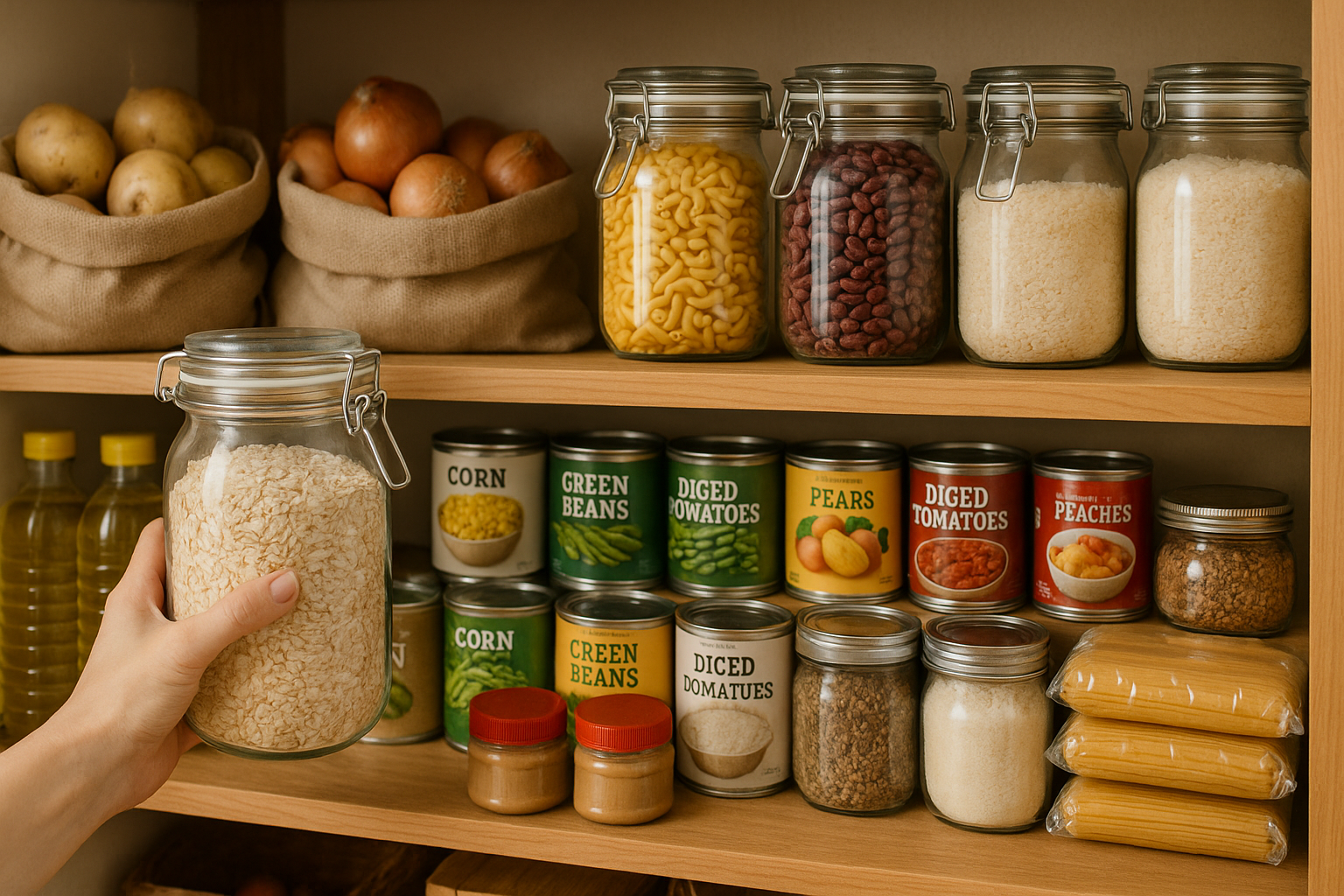
A home food storage system gives you a dependable supply of ingredients for busy weeks, weather disruptions, power outages, or temporary budget challenges. You do not need to start with a basement full of cans or expensive emergency food. The simplest approach is to store a little more of what your household already eats, organize it clearly, and replace items as you use them.
The following steps will help you create a manageable system that supports everyday cooking and basic preparedness.
Decide What Your Food Storage Should Do
Start by identifying your main goal. You might want enough pantry food to reduce grocery trips, maintain a small emergency reserve, or build a larger supply of staple ingredients. Your goal will affect what you buy and how much space you need.
For most beginners, a useful first goal is to assemble several days’ worth of simple meals from shelf-stable foods. Once that supply is organized and regularly used, you can gradually expand it. A modest system that fits your eating habits is more valuable than a large collection of unfamiliar foods.
Take Inventory Before Shopping
Check your pantry, kitchen cabinets, refrigerator, freezer, and any existing storage areas. Remove spoiled food and set aside items your household will not eat. Group the remaining products into broad categories, such as grains, canned vegetables, protein sources, baking supplies, snacks, and meal ingredients.
Write down what you have, including approximate quantities. This inventory helps prevent duplicate purchases and reveals gaps. For example, you may have plenty of pasta but very little sauce, or several cans of beans but no seasonings or grains to turn them into complete meals.
Plan Meals, Not Just Individual Foods
A storage plan works best when the ingredients fit together. Think of several easy meals your household enjoys, and then identify shelf-stable versions of the necessary ingredients. Possible meal combinations include:
- Pasta with jarred sauce and canned vegetables
- Rice with beans, salsa, and seasonings
- Soup with crackers or ingredients for shelf-stable bread
- Oatmeal with dried fruit, nuts, or shelf-stable milk
- Canned chicken or tuna with pasta, rice, or crackers
- Pancakes made from a complete mix that requires few additional ingredients
Consider dietary restrictions, allergies, cultural preferences, and the needs of children or older family members. Store foods that people can comfortably prepare and eat rather than products selected only for their long shelf life.
Choose a Suitable Storage Area
Food generally keeps best in a clean, dry, dark, and relatively cool location. A kitchen pantry is convenient, but a hall closet, sturdy shelving unit, or dedicated cabinet can also work. Avoid areas exposed to significant temperature changes, moisture, direct sunlight, chemicals, or pests.
Do not place heavy containers on weak shelves. Keep the heaviest packages and water containers on lower levels, and secure tall shelving when appropriate. If your home has limited space, consider shallow bins under a bed, over-the-door organizers for lightweight packages, or labeled containers on upper cabinet shelves.
Convenience matters. Frequently used foods should remain easy to see and reach. Emergency-only items can be stored farther back, but they should still be accessible for inspection and rotation.
Build a Balanced Starter Supply
Choose a few foods from each useful category instead of purchasing a large quantity of one product. Your starter supply may include:
Grains and Starches
- Rice, pasta, oats, or other grains your household uses
- Crackers, shelf-stable tortillas, or dry bread mixes
- Flour, cornmeal, or pancake mix if you regularly cook with them
- Instant potatoes or other easy-to-prepare side dishes
Protein Sources
- Canned beans, lentils, or dried legumes
- Canned fish, chicken, or other meats
- Nut or seed butter
- Nuts and seeds stored according to package directions
Fruits and Vegetables
- Canned vegetables with seasonings your family enjoys
- Canned fruit or fruit cups
- Dried fruit
- Jarred vegetables, applesauce, or tomato products
Meal Helpers and Essentials
- Soup, broth, sauces, and condiments
- Cooking oil, salt, sugar, herbs, and spices
- Shelf-stable milk or another suitable beverage
- Coffee, tea, and familiar comfort foods
If the supply is intended for emergencies, include foods that require little water, fuel, or preparation. Keep a manual can opener with your stored goods. Water should also be part of an emergency plan, based on current guidance from trusted local and federal emergency authorities.
Add Food Gradually and Control Costs
You do not need to make a separate shopping trip to establish your food storage system. Add one or two extra shelf-stable items during regular grocery visits, focusing on products already included in your meal plan. Sales can help, but a low price is not a bargain if the food expires before you use it or no one wants to eat it.
Set a monthly storage budget and prioritize missing meal components. Buying smaller quantities also allows you to test products before committing to larger amounts. Store brands, bulk packages, and warehouse sizes may reduce the unit price, but compare costs and make sure you can protect and use the entire quantity.
Organize for Easy Rotation
Arrange foods by category and place older items in front of newer purchases. This “first in, first out” approach encourages you to use products before their quality declines. When you bring groceries home, move existing packages forward and place new ones behind them.
Label bins and shelves with simple categories. If a package does not have an easy-to-see date, write the purchase date or best-by date on it with a marker. Avoid packing shelves so tightly that items disappear from view.
Maintain a basic inventory on paper, on your phone, or in a spreadsheet. When useful, record the item, quantity, storage location, and date. A highly detailed system is unnecessary for a small pantry. The best inventory is one you will update consistently.
Protect Food Quality and Safety
Inspect stored food regularly. Look for leaking containers, significant rust, deep dents near can seams, broken seals, moisture, mold, insects, or unusual odors. Discard food if the packaging is damaged or the product shows signs of spoilage. Never taste suspicious food to determine whether it is safe.
Keep dry goods in their intact original packaging, or transfer them to clean, food-grade containers with tight-fitting lids. Label transferred foods with the product name and relevant date. Clean spills promptly, vacuum shelf corners, and watch for pest activity.
Follow the manufacturer’s storage instructions and current food safety guidance. A best-by date usually relates to quality, while other date labels may have different meanings depending on the product. When canning food at home, use tested recipes and procedures from reliable food safety sources rather than improvising processing times or ingredient proportions.
Create a Simple Maintenance Routine
Set aside a few minutes each month to review your system. Remove damaged items, note foods that should be used soon, and add depleted staples to your grocery list. Plan meals around older inventory so that rotation becomes part of your normal cooking routine.
Review the entire system seasonally or whenever your household’s needs change. Adjust quantities if certain foods are used quickly, ignored, or difficult to prepare. You may also need to account for a new dietary restriction, a change in family size, or different cooking equipment.
Start Small and Keep the System Practical
A reliable home food storage system grows through regular use, not through one large purchase. Begin with familiar meals, organize a suitable space, add a balanced selection of foods gradually, and rotate everything into your normal routine. Over time, you will learn which quantities fit your household and which ingredients offer the most flexibility. The result is a pantry that reduces waste, supports greater household resilience, and makes everyday meal planning easier.