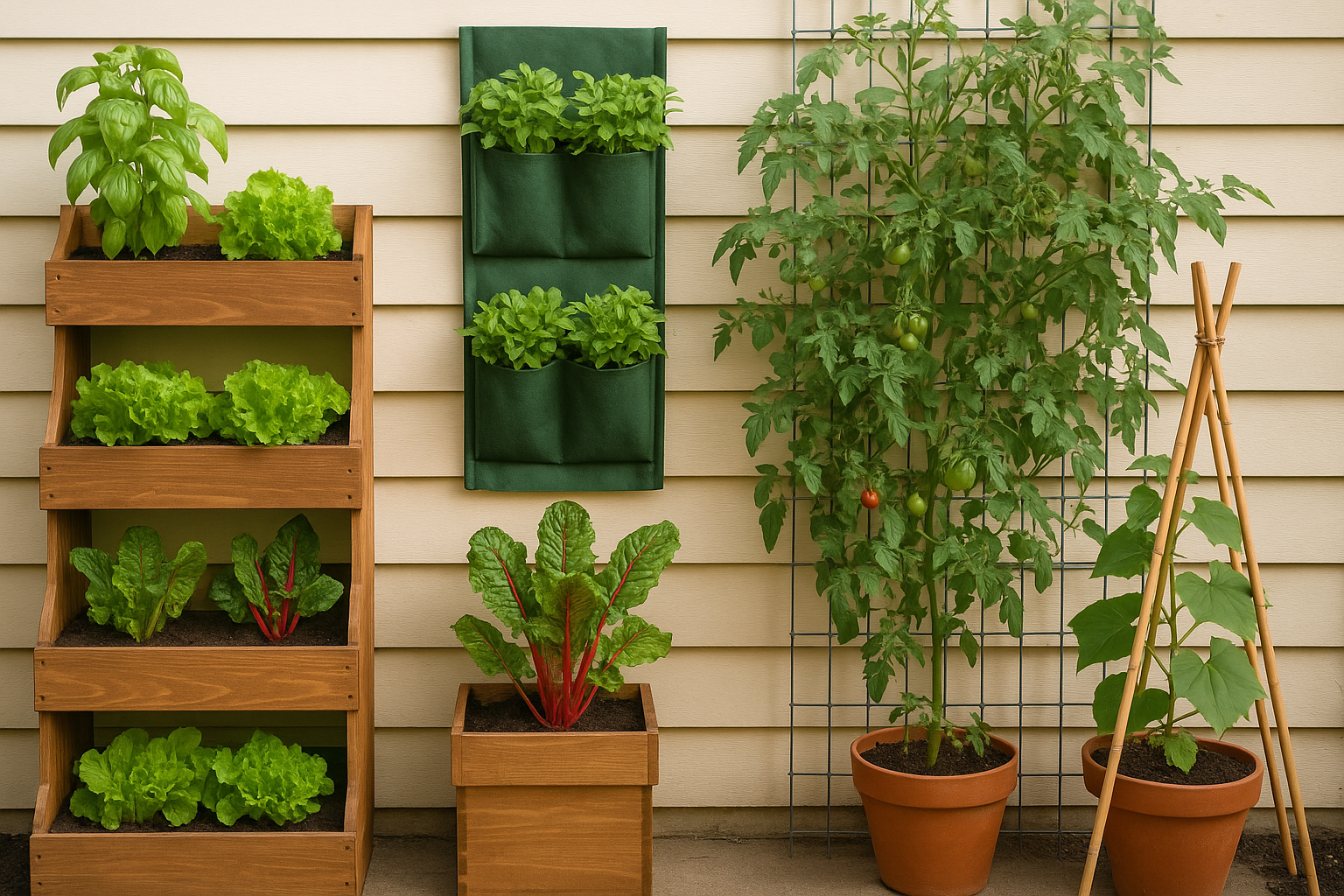
A small yard, patio, or balcony can still produce an impressive harvest when you grow upward instead of outward. Vertical vegetable gardening uses walls, fences, frames, hanging containers, and tiered structures to give plants more room to grow without taking up valuable floor space.
The best setup depends on the available sunlight, the weight your space can safely support, and the vegetables you want to grow. The following vertical vegetable garden ideas include options for renters, homeowners, beginners, and experienced gardeners.
Planning a Vertical Vegetable Garden
Before building or planting, observe the area for a full day to determine how much direct sunlight it receives. Fruiting vegetables such as tomatoes, cucumbers, peppers, and beans generally perform best in strong light. Leafy greens and many herbs can tolerate somewhat less sunlight.
Choose a location with convenient access to water. Containers and elevated planters often dry out faster than in-ground beds, especially in hot or windy conditions. Make sure walls, railings, and hanging points can safely hold the combined weight of the containers, moist soil, mature plants, and crops.
10 Vertical Vegetable Garden Ideas
1. Grow Climbing Vegetables on a Trellis
A trellis is one of the simplest ways to create a vertical vegetable garden. Position it in a garden bed or large container, and grow naturally climbing crops such as pole beans, peas, cucumbers, and small vining squash.
Guide young vines toward the support and secure them loosely if necessary. Place the trellis where it will not shade shorter crops. In the Northern Hemisphere, positioning it on the north side of a bed often helps preserve sunlight for plants in front.
2. Attach Planters to a Sunny Fence
A fence can become productive growing space when fitted with securely mounted planting containers. Use them for shallow-rooted crops such as lettuce, spinach, radishes, green onions, and compact herbs.
Leave enough space between rows so the upper plants do not block all the light from those below. Confirm that the fence is structurally sound, and avoid trapping constant moisture against untreated wood. Every container should have drainage holes to prevent soggy soil.
3. Build a Freestanding A-Frame Garden
An A-frame consists of two sloping sides that meet at the top. Mesh, wire, or narrow wooden supports along each side provide climbing surfaces for peas, beans, cucumbers, and other vines.
This design is useful when you cannot attach anything to a building or fence. It can straddle a narrow bed, creating growing space on both sides. Leave the lower center open, or plant shade-tolerant greens beneath the frame during warm weather.
4. Create a Tiered Container Garden
Arrange containers on sturdy steps, shelves, or graduated platforms so that each level receives light. Place taller plants on the lowest or back tier and smaller vegetables toward the top or front.
Tiered gardens work well for compact peppers, bush beans, leafy greens, radishes, and herbs. Secure the structure on a level surface, and keep heavy containers near the bottom. Allow room for air circulation rather than crowding the foliage.
5. Use a Ladder-Style Planter
A leaning ladder-style frame offers several narrow growing levels while occupying little ground space. Containers can rest on reinforced rungs or shelves, with trailing plants placed near the top and low-growing crops below.
This arrangement is particularly practical against a sunny exterior wall. Do not block the siding's ventilation or drainage, and anchor the frame so the wind cannot tip it over. Rotate removable containers occasionally if one side receives noticeably more sunlight.
6. Train Vegetables Over an Arch
A garden arch transforms a walkway into an overhead growing area. Climbing beans, cucumbers, peas, and lightweight squash varieties can grow up both sides and meet near the top.
Choose a strong frame that can support the vines when they are wet and loaded with produce. Harvest frequently so the vegetables do not become oversized or excessively heavy. An arch can also make crops easier to spot because many fruits hang beneath the foliage.
7. Plant a Vertical Gutter-Style Garden
Horizontal planting channels mounted in rows can hold crops with modest root systems, including lettuce, baby greens, radishes, strawberries, and small herbs. Leave adequate vertical space between the channels to prevent shading.
Because the soil volume is limited, moisture levels require close attention. Provide drainage at the lowest point of each channel, and avoid plants that need deep, expansive root systems. Secure the channels carefully, and inspect their supports throughout the season.
8. Stack Raised Beds in a Pyramid
A pyramid garden uses progressively smaller raised beds stacked toward the center. The design provides multiple planting levels while allowing access from all sides. It is suitable for leafy greens, herbs, compact root vegetables, and bush-type crops.
Fill each level with well-draining soil rather than garden soil, which may become compacted in confined spaces. Consider how water will move through the structure because the upper tiers may dry quickly while the lower sections remain moist.
9. Grow Vegetables in Hanging Containers
Hanging containers free up floor and railing space for other plants. They are best suited to lightweight crops such as loose-leaf lettuce, compact herbs, small peppers, and certain compact tomato varieties.
Use a dependable support attached to a structurally appropriate surface. Hang containers low enough to allow safe watering and harvesting. Because exposure to wind can dry them out rapidly, check the soil frequently and add mulch to help reduce evaporation.
10. Combine Containers With a Vertical Support
A deep container fitted with a cage, stake system, or trellis creates a self-contained vertical garden. This approach is ideal for patios and rental spaces because it does not require digging or permanent installation.
Match the container depth to the crop. Tomatoes, cucumbers, pole beans, and other vigorous plants need ample root space and stable supports. Avoid filling the bottom with unnecessary bulky material, which reduces soil volume and may make moisture management more difficult.
How to Keep a Vertical Vegetable Garden Productive
- Use suitable soil: Fill containers with a loose, well-draining growing mix that holds moisture without becoming waterlogged.
- Water thoroughly: Apply water until the excess drains from the bottom, then water again when the soil begins to dry. Small containers may need to be checked more frequently.
- Feed container crops: Nutrients can wash out of containers over time. Add compost where practical, and use an appropriate vegetable fertilizer according to the label directions.
- Support plants early: Install trellises and ties before the vines become tangled. Use soft, loose ties that do not cut into expanding stems.
- Maintain airflow: Space plants according to their mature size, and prune damaged or crowded foliage when appropriate.
- Harvest regularly: Frequent picking encourages many vegetables to continue producing and prevents heavy crops from straining their supports.
Choosing the Right Idea for Your Space
Start with one structure that suits your sun exposure, watering routine, and available floor space. A trellised container may be enough for a narrow balcony, while an arch or A-frame can make better use of a small yard. By pairing the right vegetables with secure supports and adequate soil, a vertical garden can turn overlooked space into a practical source of fresh food.